

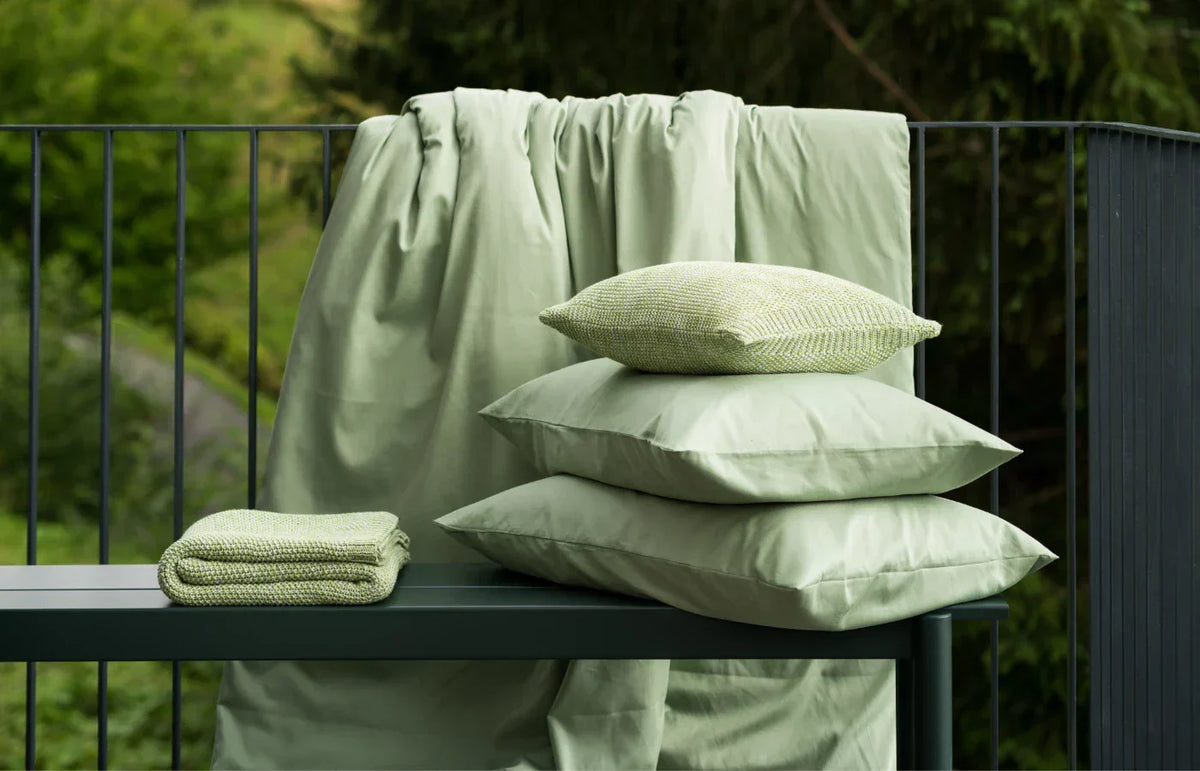
At Lejaan, we pride ourselves on the careful construction of every product. We choose the best materials, select the most suitable combinations and never overlook timeless design. We want our products to serve you as long and as well as possible. You can play your part in this too, through the care you give to your bedding, sheets and fillings.
To keep materials looking like new, it pays to look after them with care and not to forget the basics, which we will remind you of today. Don't worry, there's no science involved.
Caring for TENCEL™ Lyocell
Before you put your first TENCEL™ Lyocell cover on your bed, it is always advisable to wash the products at least once at the recommended temperature. This softens the surface of the material and prepares it for that first shared night's sleep.
To preserve the colour and all the benefits, it is essential to wash your bedding inside out. For everyday washing, 40 °C is the ideal choice; for more intensive cleaning, you can go up to 60 °C.
With TENCEL™ Lyocell, give optical brighteners and fabric softener a wide berth. The material is naturally soft and wonderfully smooth in its own right, so it does not need any chemical softeners. Fabric softener coats the fibres, which reduces their core benefits, such as breathability and effective moisture absorption.
The laundry can be tumble dried. Turn the bedding inside out and choose a gentler programme. If in doubt, the label on our product will always guide you.


The elegant and extra-soft Grandpa's Atelier collection with a TENCEL™ Lyocell content.
Getting the most from organic cotton
The magic of organic cotton lies above all in its eco-friendly production, free of chemicals and pesticides. To preserve all its benefits and its natural gentleness on the skin and the environment, we must not forget a few basic steps when caring for it.
For the longevity of your organic cotton bedding, we recommend washing at 40 °C. If you need to remove visible staining, 60 °C is perfectly fine. Always try to use an adequate amount of detergent and always wash your bedding inside out. Organic cotton can easily be tumble dried.


The rich green Mum's Kingdom bedding in 100% organic cotton, inspired by a garden in bloom.
Cotton and cotton-polyester blend bedding
With traditional cotton and cotton-polyester blends you need not worry about washing at 60 °C. After all, a firm structure and high resistance to wear are among the core benefits of both materials. If, however, you only want to freshen up your bedding or sheet, 40 °C is more than sufficient. For the best possible result, it is better to turn the bedding inside out before putting it in the machine. These collections can also be tumble dried.


Among cotton's main advantages are its strength and resistance to damage.
Don't forget the fillings
The ideal temperature for duvets and pillows from the Comfort and Classic ranges is 60 °C. Both options need only ⅓ of the usual amount of washing gel.
Try to wash all your fillings every 6-12 months. Avoid dry cleaning, bleaching or ironing them. After washing, and ideally every month, we recommend carefully fluffing up the products. This loosens and airs the fibres, which helps to maintain their fluffiness.
After waking up, always leave the bed unmade for a while. Fillings need to breathe and release the excess moisture that has built up in them overnight. You will also do no harm by airing your pillows and duvets in the fresh air from time to time.
We have dedicated a separate article to our Down Comfort duvets and pillows and how to care for them.


A few general tips to finish
As with clothes, it pays to wash white, light and dark colours of bedding separately. We generally advise against using fabric softener, for the simple reason that it contains hydrophobic substances that strip the textile of its ability to absorb water, causing bedding to lose its functional benefits.
When drying outdoors, it is better to avoid direct sunlight and always hang products with the reverse side facing out. This is how the colour stays rich and even. If you are unsure which bedding to iron, read our tips in a dedicated article.
Wash and change your bed linen ideally every two weeks. Washing naturally strengthens the fibres in the fabric's structure, which serves as effective prevention against pilling.
If you are buying a complete colour collection of bedding, consider buying a few extra pairs of pillowcases. These get more wear from the natural oils of your face, perspiration and make-up residue. It therefore pays to change them more frequently to maintain a hygienic environment.

Caring for bed linen doesn't require complicated procedures - just follow a few simple rules.
Share:
Mix & Match for Advanced Stylists
Visiting Julie Štandera